
Preah Reacheanachak KAMPUCHEA Vintage Style

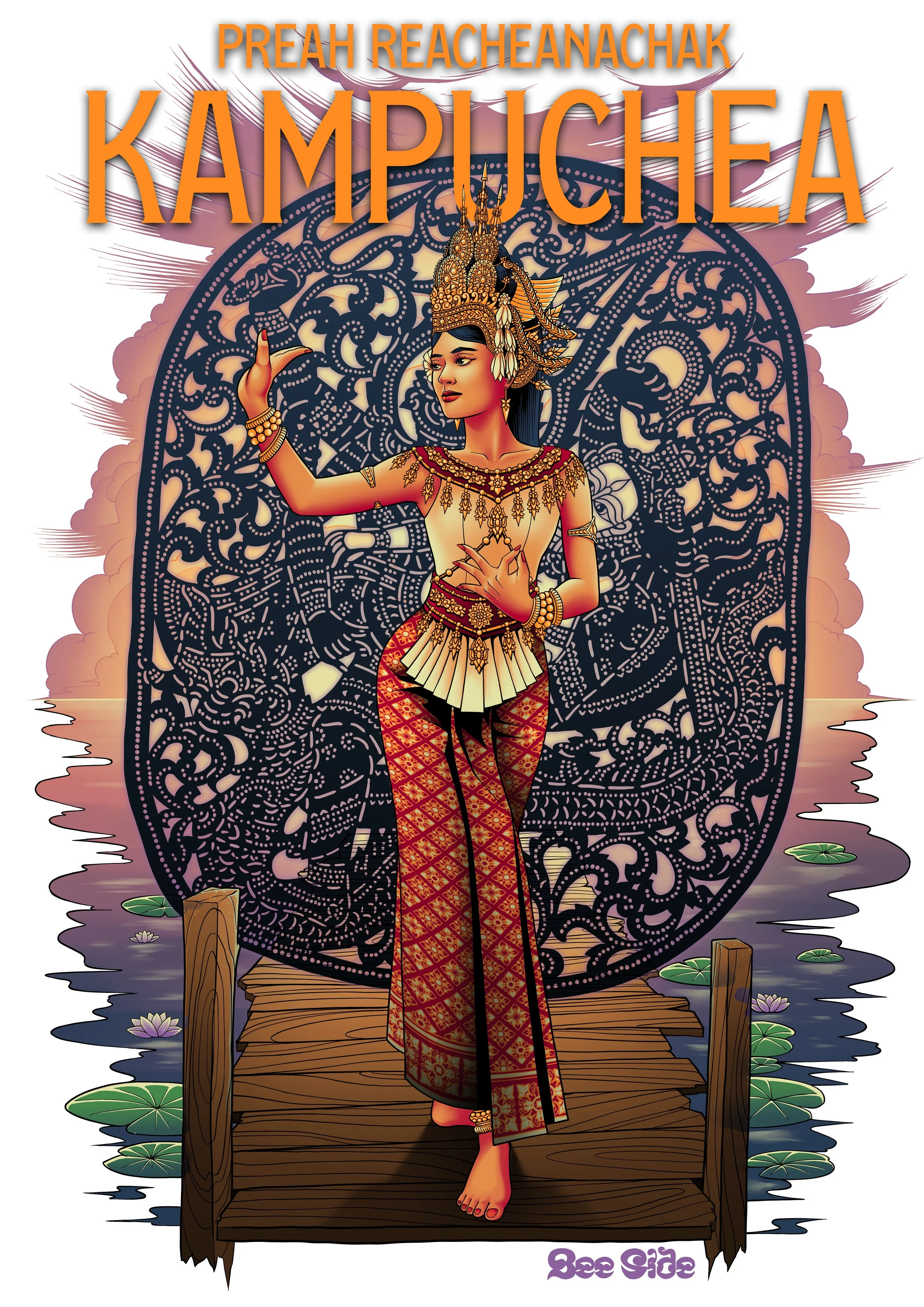
Preah Reacheanachak KAMPUCHEA Vintage Style
Built from 100% dual-yarn cotton, this heavyweight tee is made to handle everyday wear without sacrificing comfort. A custom frosted wash delivers a worn-in, vintage look with unique character in every piece, while the premium dye process helps keep the color rich over time. Finished with a relaxed oversized fit.
Hand wash
Iron - medium temperature
Do not bleach
Do not dry clean
Line dry
This design requires special processing. Please allow 7–14 business days for domestic shipping and 4–6 weeks for international shipping
Preah Reacheanachak Kampuchea – A Celebration of Khmer Heritage, Identity, and Continuity
The KHMER Apsara – An Icon of The KHMER EMPIRE
The Apsara is one of the most recognizable symbols of Cambodian culture and has been part of our KHMER civilization for more than ONE THOUSAND YEARS. The origins of the Apsara tradition can be traced back to the height of THE KHMER EMPIRE, particularly during the ANGKORIAN period (9th–15th centuries).
Thousands of Apsara figures are carved into the walls of the temples of ANGKOR, especially ANGKOR WAT, where over 1,700 Apsara and Devata carvings adorn the sandstone galleries and towers. These celestial dancers were believed to inhabit the heavens in Hindu and Buddhist traditions, representing beauty, grace, prosperity, and divine harmony.
The KHMER Apsara in this artwork reflects the elegance of classical KHMER dance through her posture and hand gestures, known as KBACH, which have been carefully preserved and passed down through generations. Every movement in KHMER classical dance carries symbolic meaning, telling stories from mythology, history, and spirituality.
Her elaborate golden crown, jewelry, and silk sampot are inspired by the attire depicted in ANGKORIAN temple carvings, creating a living connection between modern Cambodia and the artistic achievements of THE KHMER EMPIRE.
The KHMER Shadow Puppet – More Than 1,000 Years of Storytelling
Standing behind the dancer is the magnificent form of a KHMER Shadow Puppet, known as SBEK THOM. This ancient art form is one of Cambodia's oldest surviving theatrical traditions and has existed for over a millennium, with roots reaching back to the early KHMER kingdoms and flourishing during the ANGKOR era.
Historical evidence and artistic depictions suggest that shadow puppetry was already an established cultural practice during the time of THE KHMER EMPIRE, making it a tradition that has endured for more than 1,000 years.
Unlike smaller puppetry traditions, SBEK THOM uses large, hand-carved leather puppets made from treated cowhide. The intricate patterns cut into each puppet transform them into works of art in their own right. During performances, the puppets are held against illuminated screens, bringing legendary stories to life through light and shadow.
Traditionally, SBEK THOM performances tell episodes from the Reamker, the KHMER adaptation of the Indian epic Ramayana. These performances combine storytelling, music, chanting, and movement, preserving centuries of KHMER philosophy, values, and artistic expression.
In recognition of its cultural importance, UNESCO inscribed SBEK THOM on the Representative List of the Intangible Cultural Heritage of Humanity in 2008, helping to protect and promote this remarkable tradition for future generations.
A Dialogue Between Past and Present
The composition of this artwork is deeply symbolic. The KHMER Apsara stands in the foreground as a living embodiment of KHMER grace and continuity, while the towering shadow puppet behind her represents the wisdom, stories, and traditions passed down from our KHMER ancestors.
Together, they remind us that Cambodia's heritage is not confined to museums or temple walls, it continues to live through artists, dancers, musicians, and communities today.
The circular puppet design behind the dancer resembles both a protective halo and a gateway to history, suggesting that the achievements of previous generations continue to support and guide the present.
Symbols Within the Artwork
The Apsara dancer represents beauty, refinement, spirituality, and the artistic legacy of THE KHMER EMPIRE.
The SBEK THOM shadow puppet symbolizes storytelling, memory, and the preservation of Khmer identity through generations.
The lotus flowers emerging from the water represent purity, resilience, and enlightenment, growing beautifully despite difficult surroundings.
The wooden bridge symbolizes connection between the past and the future, tradition and innovation, ancestors and youth.
The water reflects continuity and life, echoing the importance of Cambodia's rivers and waterways in shaping KHMER civilization.
A Message for the Youth of Cambodia
OUR KHMER people are heirs to one of the world's great civilizations, a civilization that built ANGKOR, developed classical dance traditions admired across the globe, and preserved artistic forms such as SBEK THOM for more than a thousand years.
The KHMER Apsara and the KHMER Shadow Puppet are not merely symbols of the past; they are invitations to the future.
They remind young people that culture survives when it is learned, practiced, shared, and reimagined by each new generation. Whether through dance, music, language, education, technology, or art, today's youth have the opportunity to carry forward a legacy that has endured wars, upheaval, and centuries of change.
Know yOUR history. Honor yOUR heritage. Create yOUR future.
For over a thousand years, KHMER culture has continued to shine through stone, dance, music, and shadow. The next chapter now belongs to the KHMER youth who will preserve it, celebrate it, and bring it confidently into the future.